Building Soundscapes from Scratch
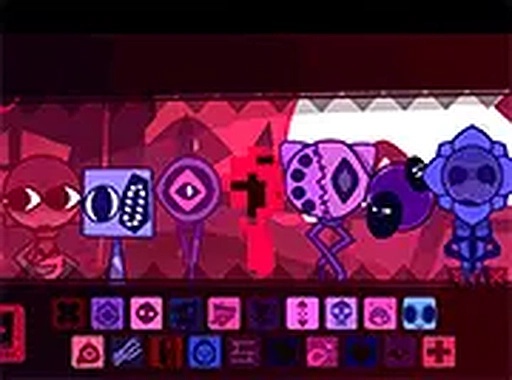
At its heart, Sound Canvas Composer is about layering sounds. You start with an empty stage and a lineup of characters, each representing a distinct audio loop. Some characters produce steady percussive beats, while others contribute melodic lines or ambient textures. By dragging a character onto the stage, its loop begins playing immediately. Adding more characters introduces new layers, allowing you to build a composition that grows in complexity. The process is entirely additive, and you can remove any character at any time to hear how the arrangement changes.
Visual Feedback and Immediate Response
The interface prioritizes clarity. When you place a character, you see a visual indicator that its loop is active. This immediate feedback helps you understand how each element contributes to the overall mix. The stage itself remains uncluttered, so you can focus on the sounds. There are no hidden menus or complex settings. Every action produces an instant audio result, making the experience feel direct and responsive. This design choice lowers the barrier for newcomers while still offering depth for those who want to explore.
Designed for Relaxed Exploration
There are no scores, timers, or failure states. The only goal is to create something that sounds pleasing to you. This lack of pressure encourages experimentation. You might start with a simple rhythm loop, then add a bass line, and later layer a melody on top. If a combination does not work, you simply remove a character and try something else. The process mirrors how a painter might mix colors on a palette, testing combinations until the picture feels right.
Browser-Based Accessibility
Sound Canvas Composer runs entirely in modern web browsers on desktop computers. There is no software to install and no account registration required. The full-screen mode removes browser chrome, letting you focus completely on your composition. Performance is optimized for smooth audio playback, even when multiple loops are active simultaneously. This makes the tool accessible to anyone with a computer and an internet connection, whether they are in a classroom, at home, or in a library.
Finding Your Own Rhythms
One of the most rewarding aspects is discovering unexpected combinations. Because each character has a unique sound, placing them in different orders or layering them in different densities produces vastly different results. You might find that a certain beat pairs well with a particular melody, or that removing one element makes the whole arrangement feel more spacious. The tool rewards curiosity and patience, offering a gentle learning curve that grows with your confidence.










Comments
0 comments